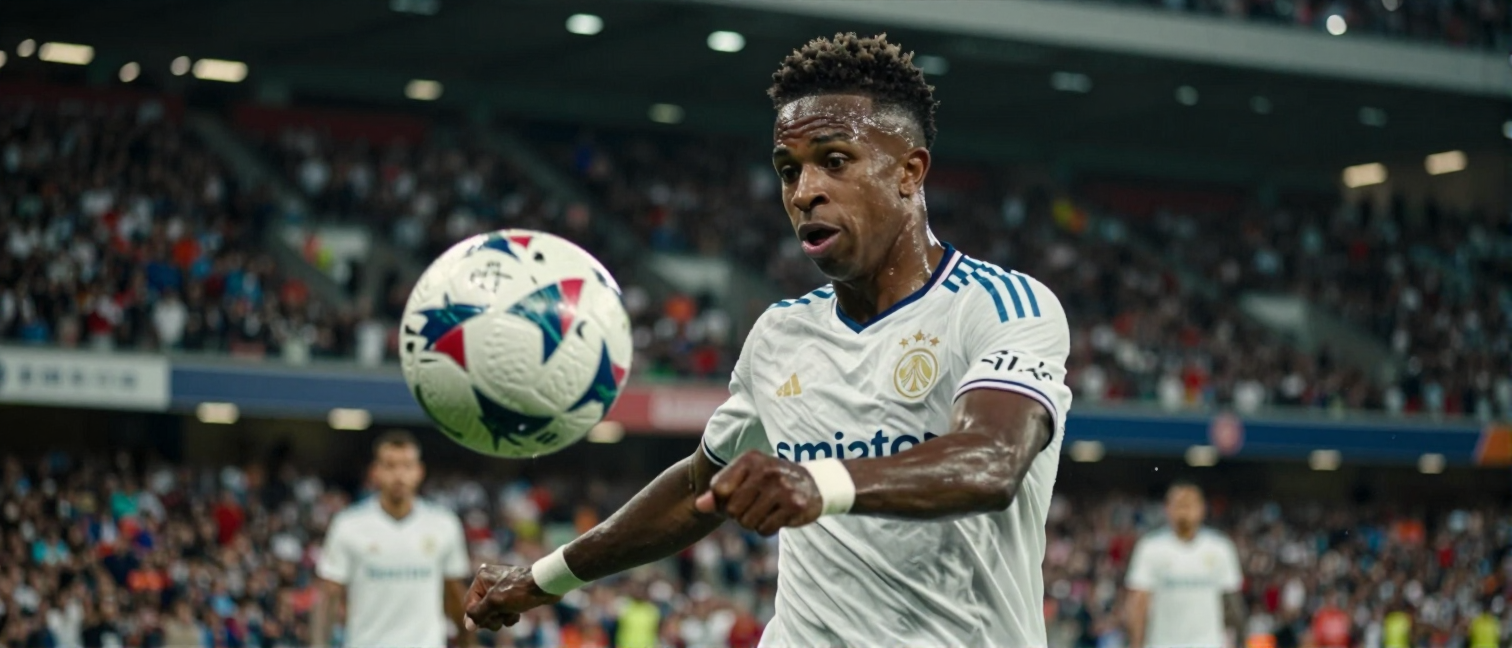
Vinicius Jr Leads Fight Against Racism in Football After Latest Mbappe Ordeal
What happened?
Kylian Mbappe's latest racism row highlights football's ongoing battle against discrimination, despite stricter regulations. The French captain publicly condemned Paraguayan senator Celeste Amarilla after she posted racist remarks targeting his heritage following France's Round of 16 victory in the FIFA World Cup 2026.
Why it matters for Vinicius Jr
The incident serves as a reminder that racism in football is no longer confined to stadium terraces, but now spills into politics, social media, and public discourse. Vinicius Jr, a Brazilian footballer, has been at the forefront of the fight against racism in football, inspiring fellow players like Mbappe to speak out against discriminatory abuse.
What comes next?
The "Vinicius Jr. Law," a controversial directive introduced by FIFA in 2026, allows referees to issue an immediate red card for racist behavior. This move aims to close a loophole that many viewed as a way for players to avoid punishment. However, despite these efforts, racism remains a persistent problem in football.
Vinicius Jr has been subjected to around 20 alleged racist incidents during his eight years in Spain. Those episodes ranged from monkey chants inside stadiums to an effigy of the Brazilian being hung from a bridge in Madrid before a derby. Instead of remaining silent, Vinicius repeatedly demanded stronger punishments, insisting that campaigns and slogans alone would never solve the problem.
His stand inspired fellow stars, including Mbappe, Jude Bellingham, Neymar, and several others, to speak more openly whenever racist abuse emerged. Yet even as awareness increased, so did the number of high-profile cases involving players such as Lamine Yamal, Nico Williams, and Alejandro Balde, demonstrating that the issue extends far beyond one club or one league.
The "Vinicius Jr. Law" has been a significant response to the problem of racism in football. However, its effectiveness remains to be seen. The incident involving Benfica's Gianluca Prestianni and Vinicius Jr. during a Champions League fixture, where allegations of discriminatory language became difficult to verify because the accused player covered his mouth while speaking, led to the introduction of this directive.
The French Football Federation, French President Emmanuel Macron, and Paraguay's own government swiftly denounced the comments made by Paraguayan senator Celeste Amarilla. However, the episode once again highlighted a troubling reality: racism in football is no longer confined to stadium terraces. It now spills into politics, social media, and public discourse, reminding the football world that despite years of campaigns and stricter regulations, prejudice continues to find new ways to surface.
The numbers alone paint a disturbing picture. By early 2026, Vinicius had reportedly been the victim of around 20 alleged racist incidents during his eight years in Spain. Those episodes ranged from monkey chants inside stadiums to an effigy of the Brazilian being hung from a bridge in Madrid before a derby.
And while the "Vinicius Jr. Law" aims to address the issue, it remains to be seen whether it will be enough to tackle the problem of racism in football. The incident involving Mbappe and Paraguayan senator Celeste Amarilla serves as a reminder that the fight against racism in football is far from over.
category: player_focus